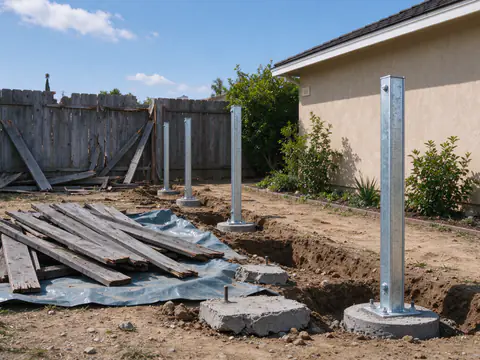
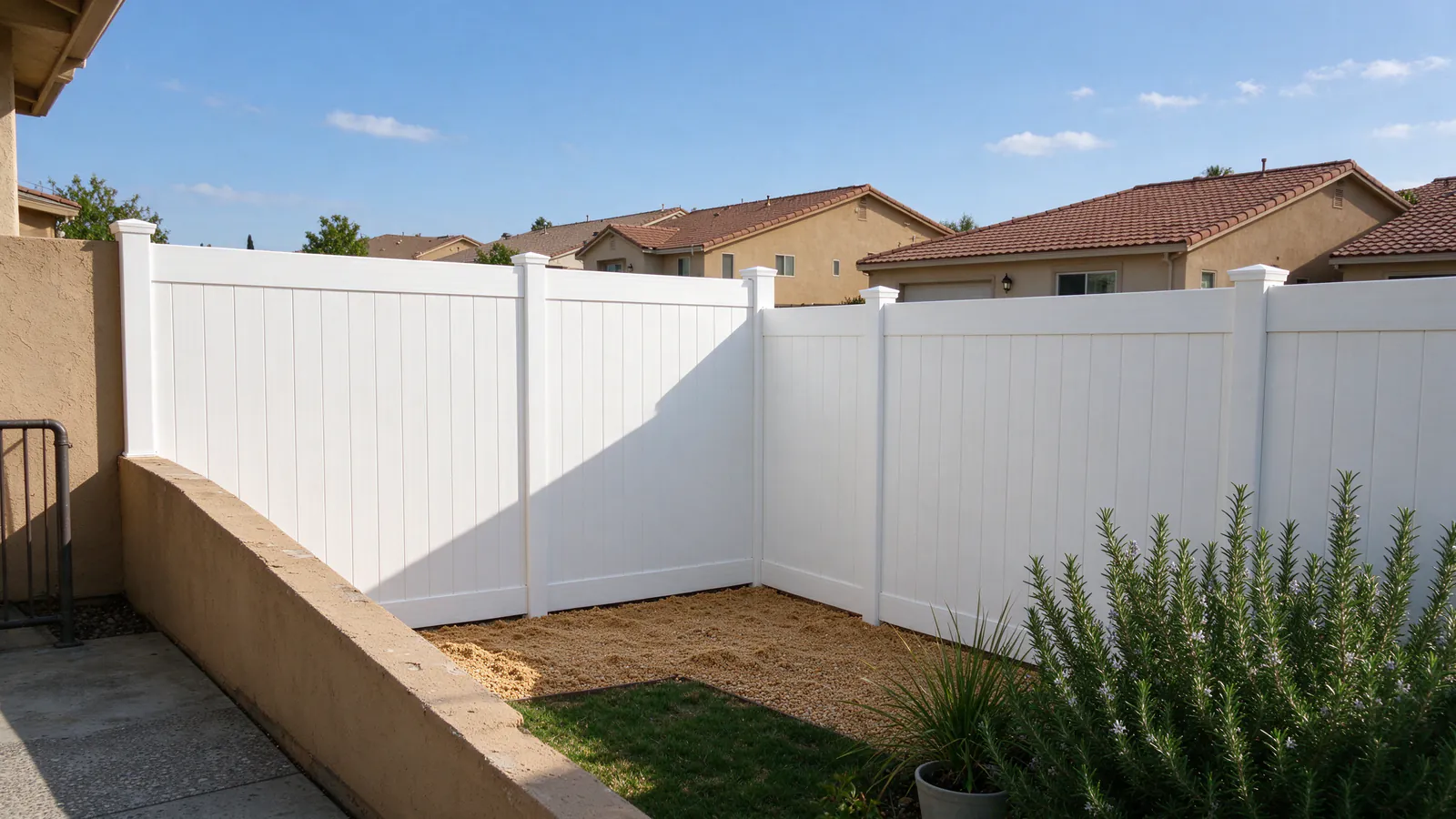
Vinyl fence installation in Ontario, CA is mostly about two forces a vinyl fence has to live with: heat that makes PVC expand and contract every day for half the year, and Santa Ana gusts that push on a solid panel like a sail. Grove Ontario Fence Builders plans and installs vinyl privacy, semi-privacy and picket fences across Ontario and the west Inland Empire, from 6-foot backyard runs in Ontario Ranch to 3-foot front-yard pickets. Installation is carried out by licensed and insured fence contractors. This page explains how a vinyl fence is put together, what makes one stay straight and tight here, and where vinyl fits better or worse than the other choices.
Homeowners pick vinyl because it never needs staining, does not rot and does not feed termites. Those are real advantages in a hot, dry valley. It is not maintenance-free, though: it gets dirty, it can crack from an impact, and a cheap or badly reinforced system sags and loosens long before the plastic itself wears out.
What happens on the first visit
The visit starts with the line itself. Corners, gate openings and the point where the fence meets the house are marked, and the run is measured against the panel width of the system you are considering, because vinyl comes in fixed panel lengths and posts have to land where the panels end. Grade changes are noted at the same time. Ontario measures fence height from the lowest adjacent finished grade, so a panel set on a raised planter or the high side of a slope can exceed the 6-foot limit even when the panel itself is 6 feet. If the property line is uncertain, that comes up before the price is final; an old fence is not proof of the line, and the property line and survey guide explains when a surveyor is needed.
The walk also covers who else is involved. A shared fence brings in California Civil Code 841 and its 30-day written notice, explained in the good neighbor fence law guide. Many Ontario Ranch tracts need HOA approval of the color and style before anything is ordered, and the HOA fence approval guide shows what a submittal usually contains. Then come the permit and a DigAlert ticket at least two working days before the first hole. The fence installation process guide follows the job from there.
How a vinyl fence system is built
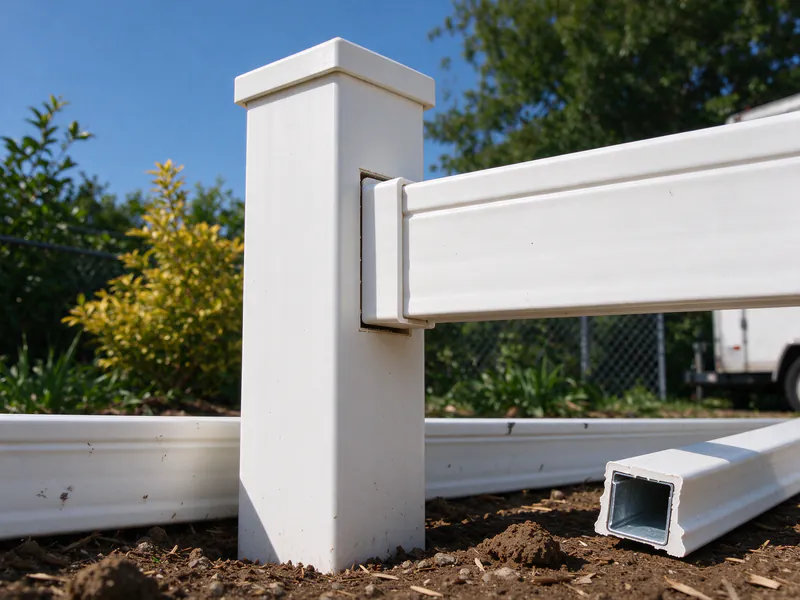
A vinyl fence is a kit of extruded PVC parts that interlock. Hollow posts, commonly 5 by 5 inches on a privacy fence, are set in concrete. Rails slide into holes routed through the posts. Tongue-and-groove pickets drop into channels in the rails to form a solid face, and a cap closes the top of each post. Nothing is nailed the way a wood fence is, which is why the system can look so clean and why its quality hides inside the parts.
Three details separate a vinyl fence that stays straight from one that sags:
- Rail reinforcement. A bottom rail carries the weight of every picket above it. In heat, an unreinforced PVC rail slowly bows. Better systems slide an aluminum channel inside the bottom rail so it holds its line for the life of the fence.
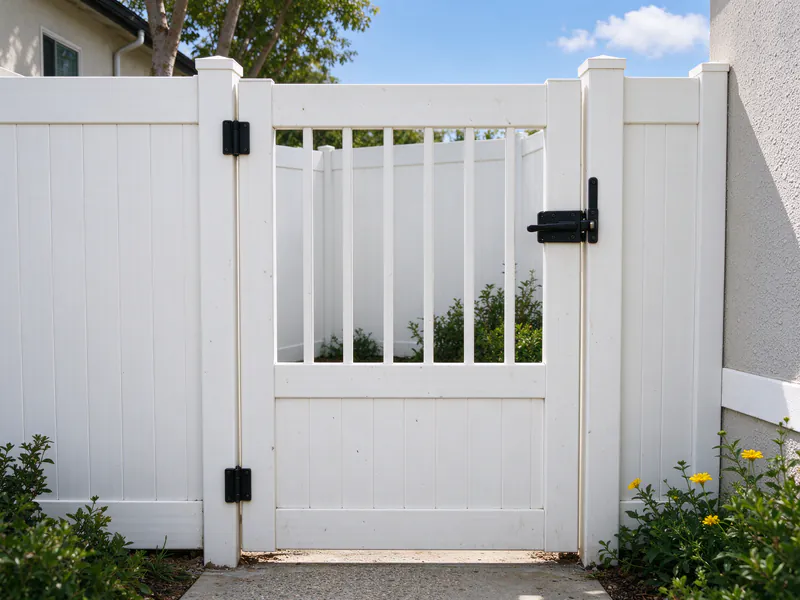
- Post reinforcement at gates and ends. A hollow vinyl post flexes. Gate posts carry a swinging load every day, and end and corner posts carry the pull of the whole run, so they usually get an aluminum or steel insert, or are filled with concrete, according to the system’s instructions. A gate hung on an unreinforced vinyl post is the usual start of a sagging gate.
- Room to move. PVC expands noticeably more with temperature than wood or steel does. Rails need space in the post routes, and long runs are laid out so that a fence installed on a cool morning does not bow when the panels reach full afternoon heat in August.
Wall thickness and profile vary from one manufacturer’s line to the next, and that is a large part of why vinyl prices spread so widely. A heavier tongue-and-groove system with thicker walls and aluminum-reinforced rails costs more per foot and holds up better to wind and to a ball or a dog hitting it.
Heat, sun and color in a valley climate
NOAA’s 1991-2020 climate normals for Ontario International Airport show about 93 days a year at or above 90°F and 19 at or above 100°F. That heat is the main thing a vinyl fence fights here. Each hot day the panels expand; each night they shrink back. A fence built with too little room at the rails, or with pickets screwed tight, shows it as waves along the top line or pickets pulling out of their channels.
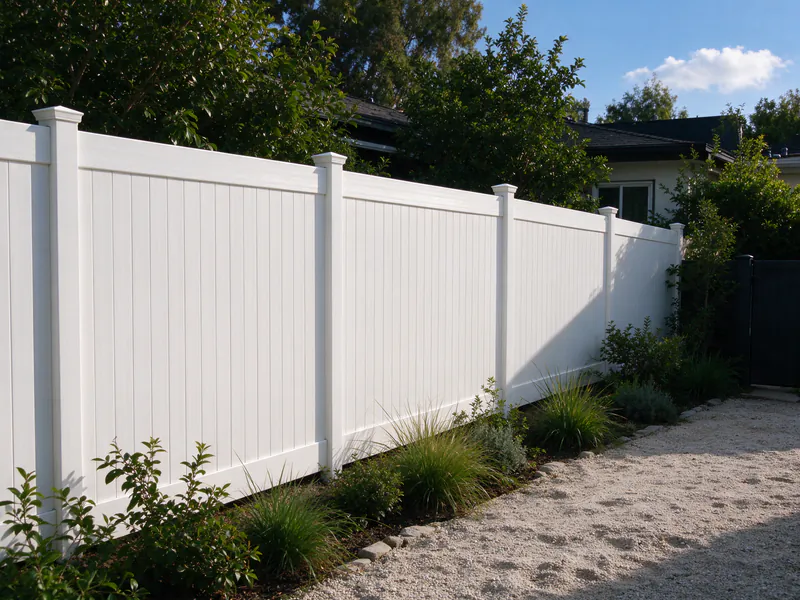
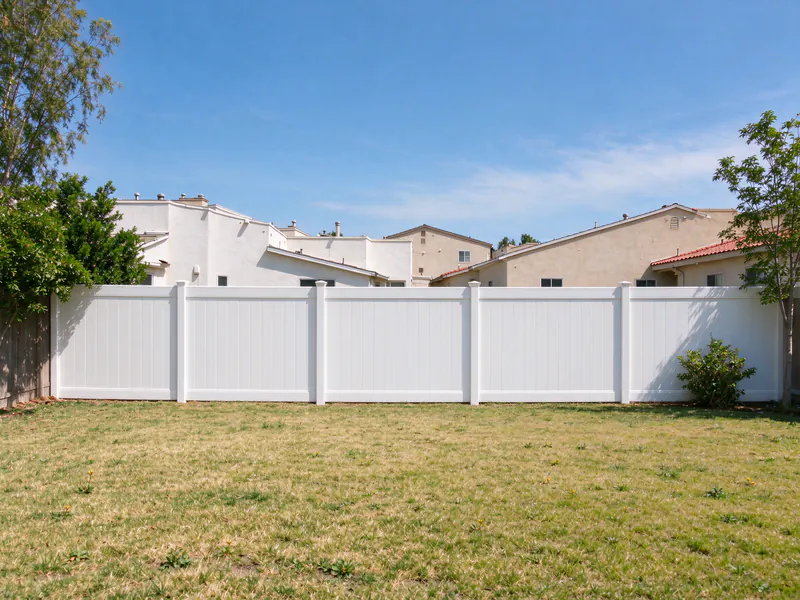
Color matters because dark surfaces get hotter in sun. White, almond and tan vinyl reflect more heat and age most evenly. Darker colors and the printed wood-grain finishes some HOAs prefer run hotter, move more and can be more sensitive to the system’s installation limits, so the manufacturer’s instructions for that color are followed exactly. Frost, the other enemy of vinyl in cold states, barely exists on the valley floor: the same NOAA normals average fewer than two nights a year at or below freezing.
Vinyl needs washing more than anything else. Dust, sprinkler minerals and the hard-water spots of an irrigation system that sprays the fence are the common complaints, and keeping sprinkler heads aimed away from the panels prevents most of them. The how long fences last guide compares vinyl’s service life with wood and metal.
Get the reinforcement right before the panels
Send the length, the height and the gate locations. The post layout and stiffeners are planned around them.
Wind, sandy soil and how vinyl posts are set
A solid vinyl privacy fence catches wind across its whole face. The National Weather Service office in San Diego issued 44 High Wind Warnings for the Inland Empire valley zone that includes Ontario from January 2016 through October 2026, nearly all between October and February, and its warning texts place the strongest gusts below the Cajon Pass, in the Fontana and Rancho Cucamonga corridor. Anyone shopping for vinyl fencing in Fontana or north Rancho Cucamonga is building in the windiest part of the valley.
The ground does not help. USDA soil survey data puts central Ontario on Tujunga loamy sand and much of Ontario Ranch on Delhi fine sand, which is nearly all sand. Sand drains well and barely swells, but it gives a post less grip than heavier soil. The City of Ontario’s design criteria in Information Bulletin 103 assume wind Exposure C, open terrain. No single post depth suits every vinyl fence: the footing is sized from the fence height, the panel type, the post spacing, the soil at that spot and the exposure, and a 6-foot solid panel in sand generally needs a deeper or wider footing than a short picket fence. The Santa Ana winds guide explains what a gust does to a fence line.
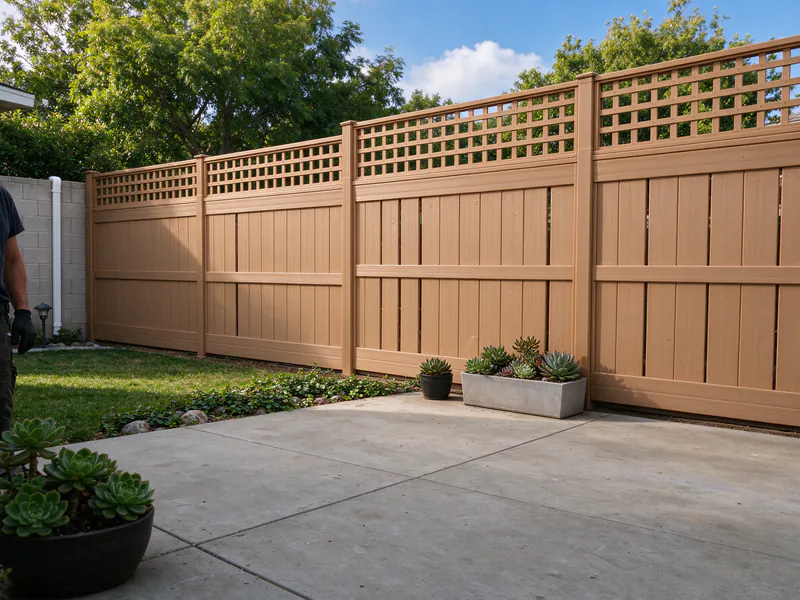
Where the line is exposed, there are two ways to reduce the load. A semi-privacy style or a lattice top lets part of the gust through, and the comparison table on this page sets those styles side by side. The other is to keep the solid face but strengthen what holds it, with inserts in more posts and larger footings. Marketing claims about a vinyl fence’s wind rating describe the product under test conditions, not a fence set in Ontario sand.
Vinyl in Ontario, Ontario Ranch and the cities nearby
Ontario’s Development Code lists PVC “consistent with industry standards” among the approved residential fence materials, alongside wood and ornamental iron or steel, and limits fences to 6 feet on side, street-side and rear lines and 3 feet in front yards. The city’s Building Permit FAQ requires a permit for wood, chain link and iron fences over 3 feet; it does not name vinyl, so a vinyl fence over 3 feet is treated the same way until the Building Department says otherwise. The Ontario fence permit guide has the full rules.
In Ontario Ranch, specific plans and HOAs often decide the material before the city does. The Edenglen plan, for example, bars wood on thematic perimeter fencing and asks for durable wood-look material or tubular steel, which is one reason vinyl and wood-look vinyl are common in those tracts; the Ontario Ranch page covers those rules. Rancho Cucamonga accepts solid vinyl for residential screening fences and needs no building permit for a fence up to 6 feet, as the Rancho Cucamonga page explains. Chino Hills exempts light fences up to 6 feet as well, and most of its land sits in Very High fire hazard zones, which raises the question in the wildfire zone fence guide: vinyl is combustible, and draft state rules would keep new combustible fences out of the first 5 feet around a home.
Many Ontario lots already have block walls on the side and rear lines, so the vinyl work there is often a return fence, a gate or a run along one open side. Where a homeowner is deciding between a new vinyl fence and a wall, the block wall vs fence guide compares them, and a fence on top of an existing wall belongs on the block wall extension page.
What a vinyl fence costs in Ontario
A typical Southern California range for a 6-foot vinyl privacy fence, installed, is about $35 to $75 per linear foot, and heavier tongue-and-groove systems, reinforced posts and decorative tops can run past the top of that range. On a 100-foot run that is roughly $3,500 to $7,500 and up before gates, removal and the permit. It is a budgeting figure, not a quote. Thicker profiles, aluminum-reinforced rails, wood-grain colors, lattice tops, slopes that need stepped panels and many gates move a job up the range; a plain white privacy fence on a level, open line sits near the bottom.
Removing and hauling away an old fence typically adds $3 to $8 per linear foot, and the fence replacement page covers that work. Gates are priced by size, frame and hardware through gate installation, or for wide openings, RV and driveway gates. The City of Ontario charges permit fees by project valuation; as an example from its published fee table, a $6,000 valuation carries a $125.25 permit, about $226 with plan check. The vinyl vs wood guide compares lifetime cost with a wood fence, a horizontal slat fence has its own page, and the fence cost estimator turns your length, height and gates into a range.