Wrought iron fence installation in Ontario, CA today almost always means steel. Solid bar steel, hollow tubular steel and aluminum have replaced true wrought iron, and the choice between them, along with the finish and how the posts are set, decides how a metal fence looks in twenty years. Grove Ontario Fence Builders installs ornamental steel and aluminum fences and gates across Ontario and the west Inland Empire, for front yards, pool enclosures, view lines and the tops of block walls. Installation is carried out by licensed and insured fence contractors. This page explains the materials, how they are built and finished, where local rules shape them, and when an old iron fence is worth repairing.
A metal fence does a different job from a wood or vinyl privacy fence. It marks a line, keeps children and pets in, satisfies pool barrier rules and leaves the view open. Because air passes through it, a Santa Ana gust that strains a solid 6-foot panel barely loads an open steel fence of the same height.
What happens on the first visit
The first visit measures the line, the gate openings and the slope. Metal sections are fabricated or ordered to length, so measurements decide whether the job uses custom welded sections built to the exact run or prefabricated panels that come in fixed widths. On a slope, the walk also decides between stepped sections, which stay level and drop at each post, and racked panels, whose rails follow the grade. Aluminum panels rack easily; welded steel can be built to the slope.
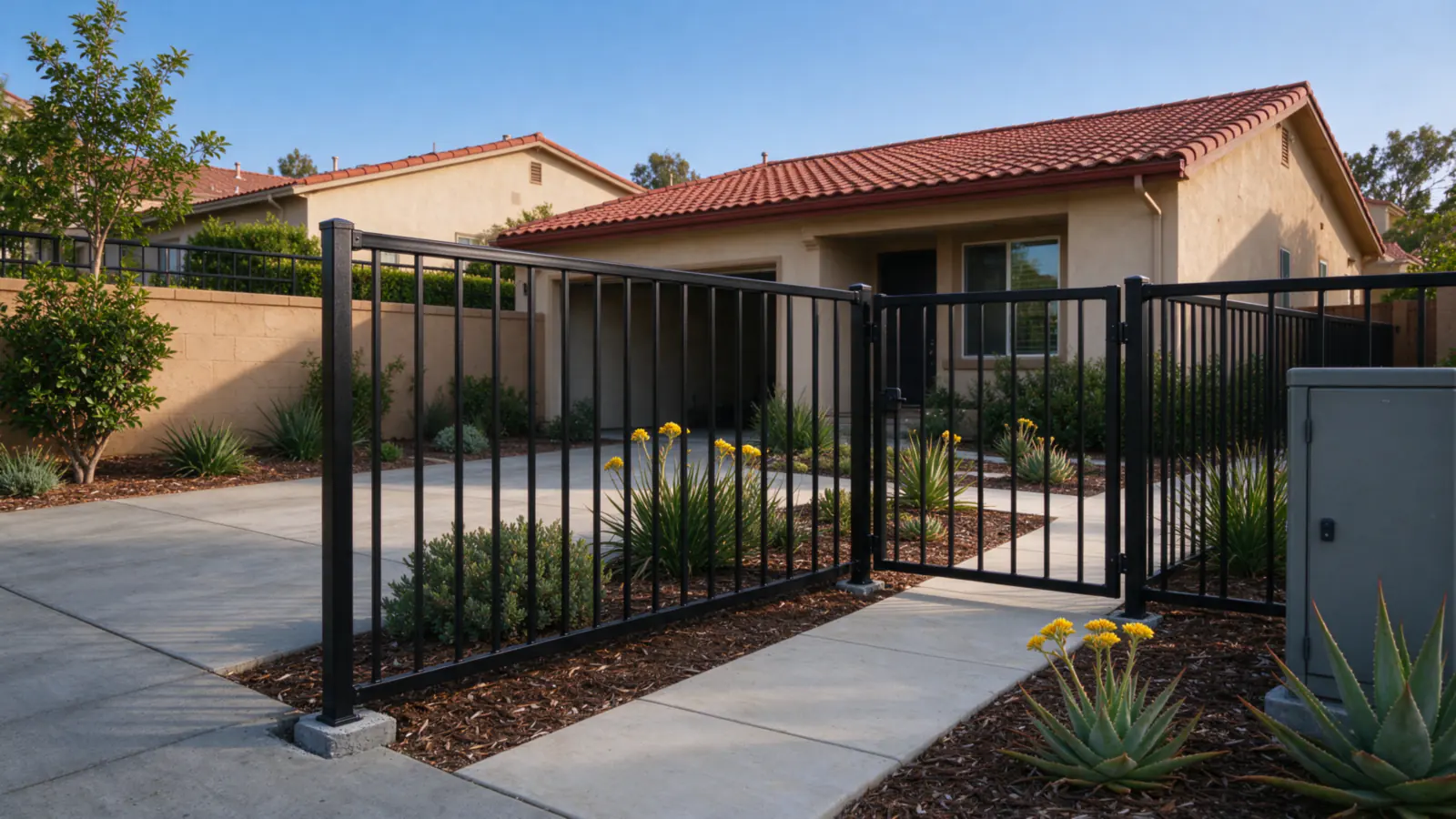
Location on the lot matters more for iron than for most fences, because iron is the usual choice for front yards. Ontario’s Development Code allows 3 feet in a front yard and 6 feet on side, street-side and rear lines, measured from the lowest adjacent finished grade. Property lines, the street right-of-way and the corner clearance at intersections are checked before a post location is set, and the property line and survey guide explains when a surveyor is needed. After that come the permit, any HOA approval and a DigAlert ticket two working days before digging. The fence installation process guide covers the order of work.
Solid bar steel, tubular steel and aluminum
True wrought iron is a fibrous, low-carbon iron worked by hand, and it has not been produced in quantity for decades. It survives in old fences and restoration work. What the trade sells as wrought iron or rod iron is mild steel, built one of two ways.
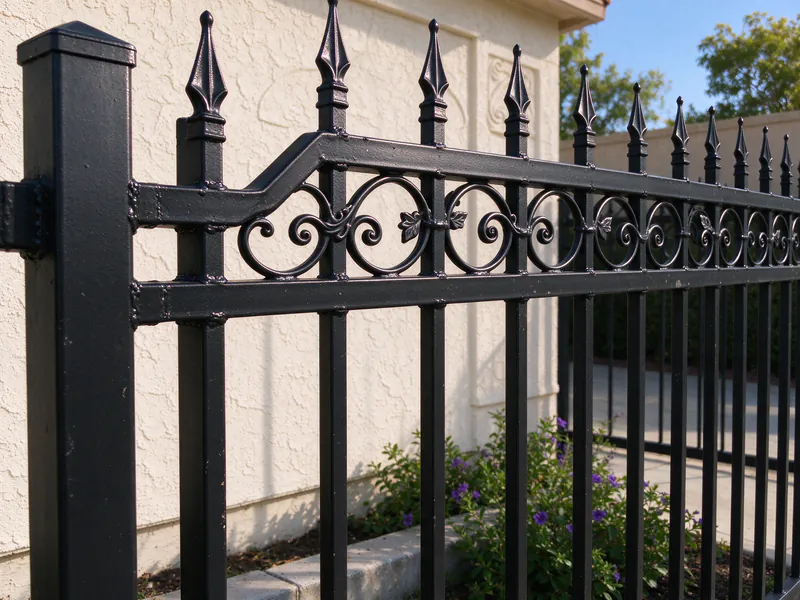
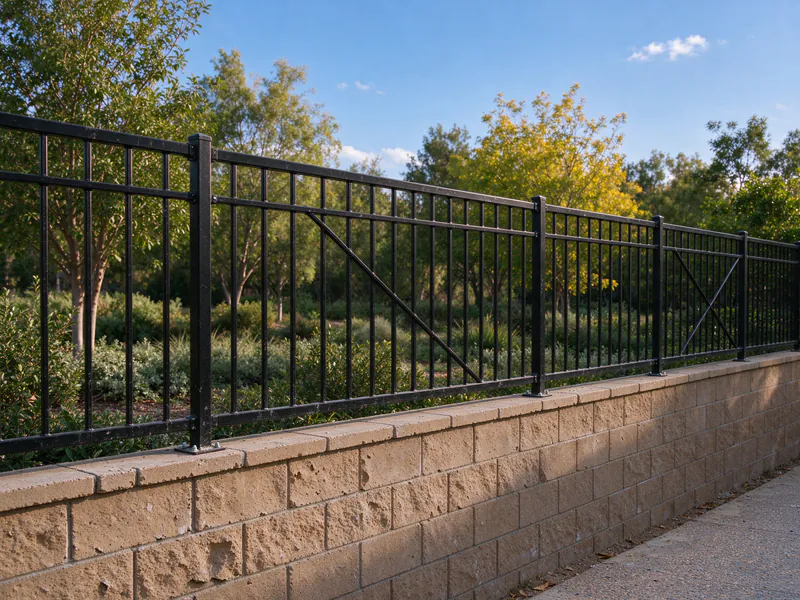
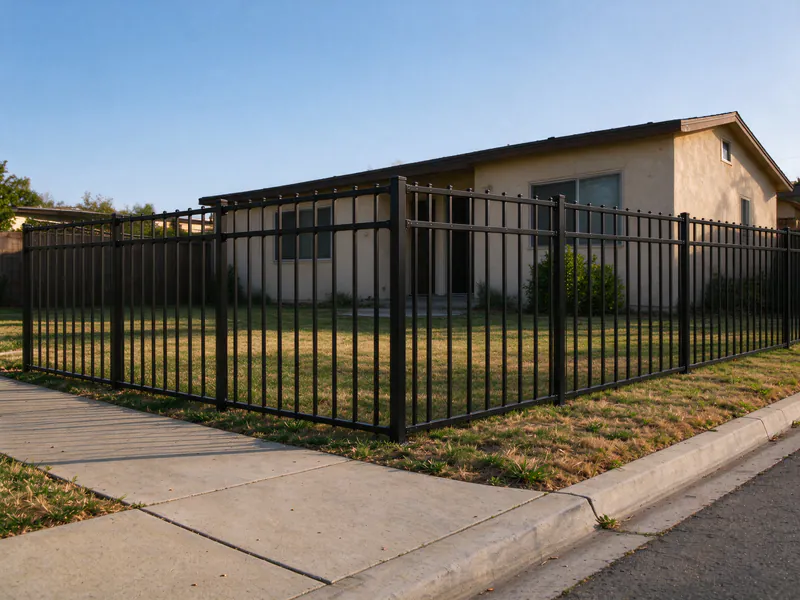
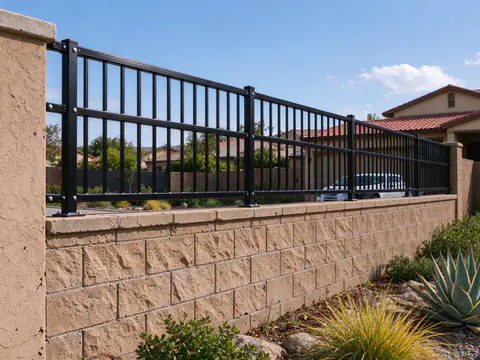
Solid bar steel uses square bar pickets welded to flat or channel rails. It is heavy and stiff, takes a hit without denting, and is the material for custom scrolls, finials and entry gates. Tubular steel uses hollow square tube for pickets, rails and posts. It is lighter and less costly per foot, easy to weld into long runs, and the usual material for view fencing and for toppers on block walls. Its weak point is the inside of the tube: once water gets in through an uncapped post or an open cut, it rusts from within.
Aluminum is the third option. It is supplied as powder-coated panels with pickets set through punched rails, weighs a fraction of what steel does and does not rust red. It flexes more than steel, so tall aluminum gates need a well-braced frame and solid posts. Ontario’s code names ornamental iron and tube steel among allowed metal fences, so aluminum is confirmed with Planning for the address before it is ordered. The wrought iron vs tubular steel vs aluminum guide compares all three in depth, and the table on this page summarizes them.
Finish, welds and why metal fences rust where they do
Steel lasts as long as its coating does. Powder coating, a dry paint baked onto the metal in a factory oven, is thicker and more even than brushed or sprayed paint, and it is the usual finish on new fencing. Some steel fencing is galvanized under the powder coat for a second layer of protection. Field welds and cuts made on site break the factory finish, so they are cleaned, primed and painted before the job is done.
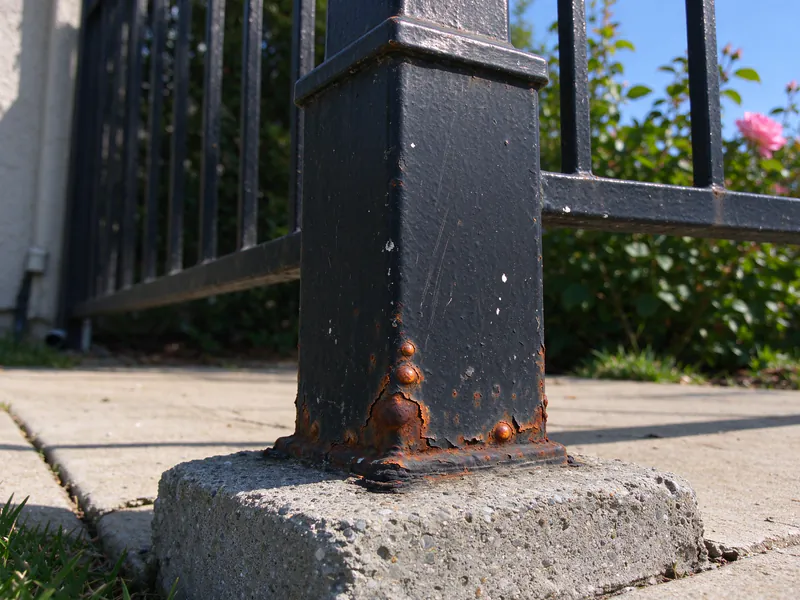
Rust starts where water stays longest. On the valley floor that is rarely rain: NOAA’s normals for Ontario’s airport show under 12 inches a year. It is sprinklers that spray the fence daily, soil piled against the bottom rail, and the joint where a post enters its concrete. A crowned footing that sheds water, a post cap on every hollow post and sprinkler heads turned away from the line do more for a steel fence’s life than any paint. Once rust has broken through the finish, it spreads underneath it, so the first bubbles are the time to deal with it.
Strong sun ages the finish too. With about 93 days a year at or above 90°F, black and dark bronze finishes run hot and can chalk over time. That is cosmetic until the coating thins enough to let rust start.
Plan the metal, the finish and the gates together
Send the length, the height and the gate openings. The material and post plan come first.
Posts, gates and the ground they sit in
Metal fence posts are set in concrete, and their size follows the panel height and the gate loads. A line post on a 4-foot fence carries little; a gate post carries the weight of a swinging steel gate all day, and that load grows with the gate’s width. Gate posts are heavier, set in larger footings, and hung with hinges rated for the gate’s weight, with a stop so the gate does not swing past its latch. That is the part of a metal fence that most often fails first, and the gate installation page covers it in detail.
USDA soil survey data puts most of Ontario on loose sand, Tujunga loamy sand in central Ontario and Delhi fine sand in much of Ontario Ranch. Sand gives a post less grip than firmer soil, so footing depth and width come from the post’s job and the soil at that spot rather than one number for every post. In the firmer Hanford coarse sandy loam mapped in Rancho Cucamonga and Upland, the same fence may need a different footing.
Where iron fits in Ontario and the nearby cities
Front yards are where city rules differ most. Ontario caps front-yard fences at 3 feet. Rancho Cucamonga allows open fencing such as wrought iron up to 6 feet in a front yard, while solid fences there stop at 3 feet, so a tall iron front fence that is routine in Rancho Cucamonga is not allowed in Ontario. The Rancho Cucamonga page covers those rules. If an iron fence is used for screening in Rancho Cucamonga, the city requires it to be backed with solid or perforated metal sheeting painted to match.
Ontario requires a building permit for open or screened wrought iron fences and gates over 3 feet. Its large-lot AR-2 and RE-2 zones prefer wood rail fencing along equestrian trail easements and say iron should be avoided there. In Ontario Ranch, specific plans such as Edenglen list decorative iron, tubular steel, aluminum or glass for view fencing, and the Ontario Ranch page explains how those plans work. Gate work in Pomona and the other cities without a page here follows each city’s own rules, confirmed per address. The Ontario fence permit guide has the full height and permit rules.
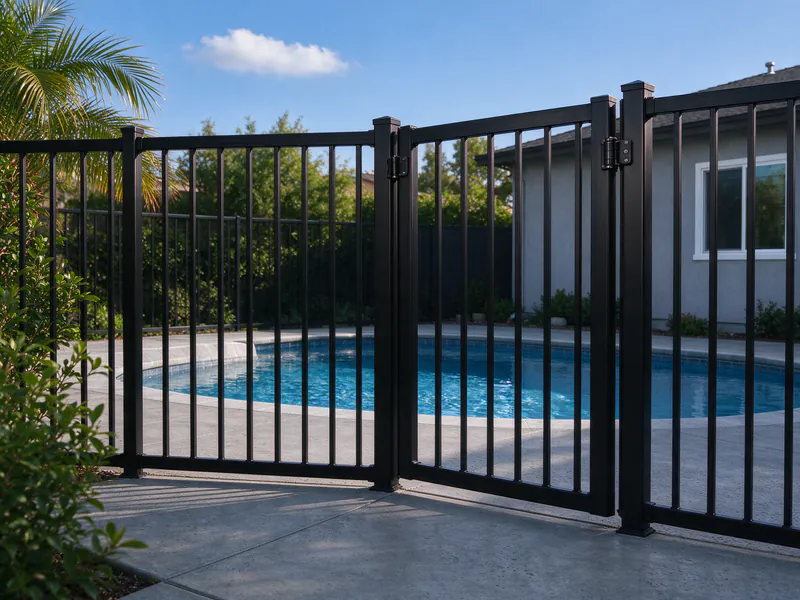
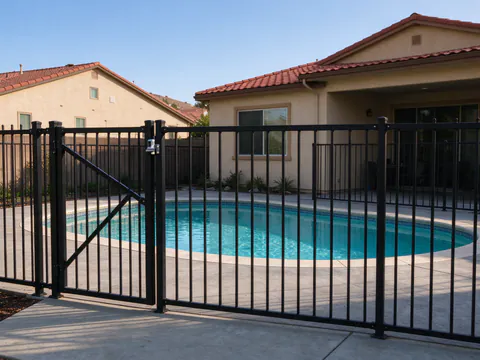
Pools are the other common use. A steel or aluminum pool fence must meet the enclosure rules in California Health and Safety Code 115923: at least 60 inches tall, no gap that passes a 4-inch sphere, no more than 2 inches to the ground, and self-closing, self-latching gates that open away from the pool. The pool fence installation page covers that work. In the foothill fire zones of Chino Hills and north Rancho Cucamonga, metal is the noncombustible choice near a house, which the wildfire zone fence guide explains.
Repairing and repainting an existing iron fence
An old iron fence that leans, rattles or shows rust is not automatically a replacement. Surface rust is cleaned back to sound metal, primed and repainted. A broken picket or a cracked weld is cut out and rewelded. A post rusted through at the base can sometimes be cut and sleeved, or replaced on its own, while the sections stay. Those are fence repair jobs, priced by what is broken.
Replacement makes more sense when rust has thinned the rails along much of the line, when several posts are rotted through at the concrete, or when the fence no longer meets a rule it now has to meet, such as a pool barrier. The fence replacement page covers tear-out and a new line. Adding iron to the top of an existing block wall is its own job, on the block wall extension page.
What an iron or steel fence costs
Ornamental tubular steel, solid bar steel or aluminum fencing typically runs about $35 to $100 per linear foot installed for Southern California projects. Height, picket size and spacing, the post style, the finish, custom scrollwork and on-site welding set where a job lands. A 3-foot aluminum front fence in standard panels sits near the bottom; a 6-foot custom welded solid bar fence on a slope sits near the top. Gates are priced separately by width, frame and hardware, through gate installation or, for wide openings, RV and driveway gates and automatic gates. Removal of an old fence typically adds $3 to $8 per linear foot. These are budgeting figures, not quotes; the fence cost guide and the fence cost estimator break them down further.