Fence repair in Ontario, CA starts with one question the visible damage does not answer on its own: is this an isolated failure, or the first sign of a fence wearing out from end to end? Grove Ontario Fence Builders repairs wood, vinyl, chain link and iron fences across Ontario and the west Inland Empire, from a single leaning post or a broken board to a run flattened by wind. The work is carried out by licensed and insured fence contractors. This page covers the common failures here, how each is repaired, how termite and rot damage are judged, and how to tell when a repair is the right spend and when the money belongs in fence replacement instead.
A fence knocked down in a storm or by a car, where something needs securing right now, is covered on the emergency fence repair page. This page is about the planned repair that follows, or the slow failure that never was an emergency.
What happens on the first visit
The visit starts at the damage and then walks the whole run. A leaning post is pushed to see whether it moves in its footing or flexes at the ground line, which tells a failed footing from a rotted post. The posts on either side are checked the same way, because a fence fails at its weakest post first and the next weakest is often nearby. Rails are checked where they meet the posts, boards along the bottom edge where sprinklers and soil reach them, and gates for sag. On a vinyl fence, the visit notes whether the system is still made, since that decides whether parts can be matched.
The visit also records what limits the repair: whether the fence is shared with a neighbor, whether a property line is in question, and what sits close to the posts, such as irrigation lines, a slab or a block wall. Any new post hole needs a DigAlert ticket at least two working days ahead under Government Code 4216.2, even for a one-post job.
Leaning posts: footing failure or rot
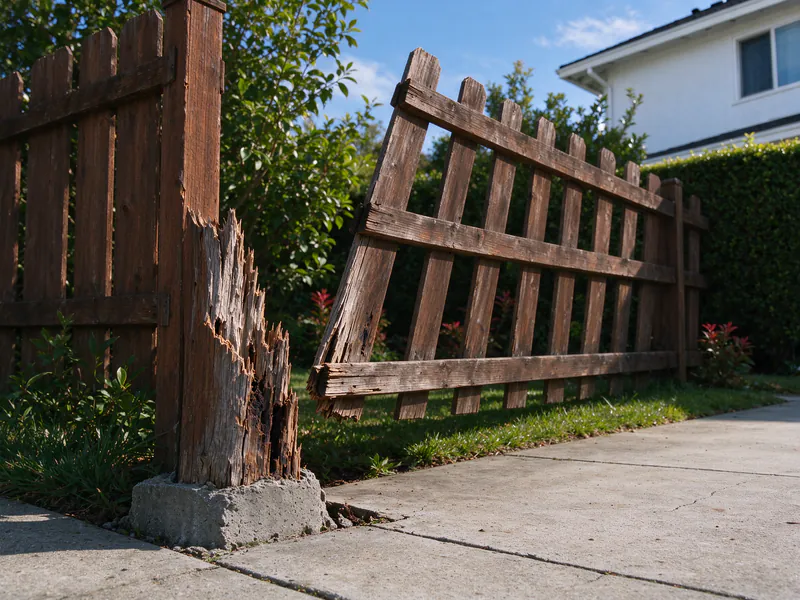
A post leans for one of two reasons, and the repair differs. Either the post is sound but its footing has rotated in the ground, or the post has rotted or been eaten at the ground line and is bending where it meets the concrete.
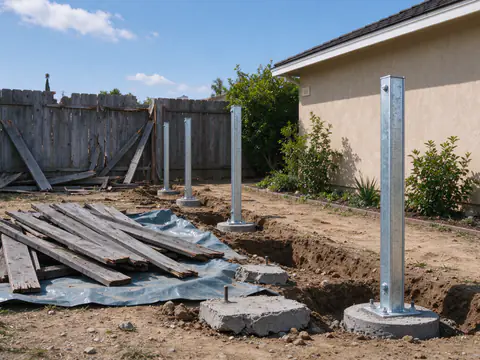
Footing failures are common in Ontario’s ground. USDA soil survey data puts central Ontario on Tujunga loamy sand, about 80 percent sand, and much of Ontario Ranch on Delhi fine sand at roughly 96 percent sand. Loose sand drains well but gives a footing less grip, and a 6-foot solid fence leans on every post in a strong gust. A footing that was shallow or narrow for its fence rotates a little with each wind event until the lean shows. Resetting that post means digging out the old footing and setting a new one sized for the fence height and the soil; tamping soil around the old concrete does not last.
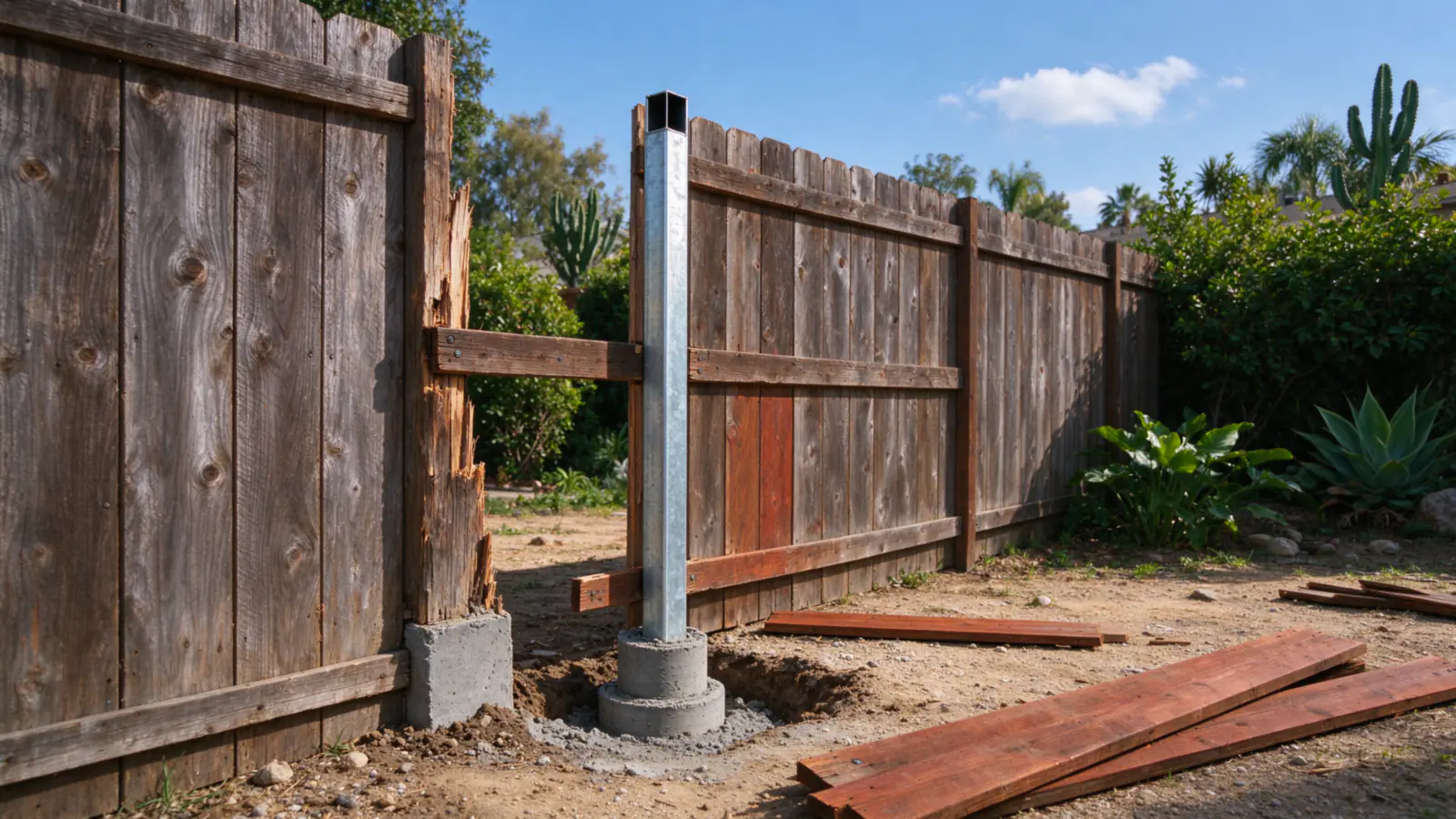
Rot works differently. Wood rots fastest where it is wet and in contact with soil, so a post fails just below grade or right where it enters the concrete, especially if the footing was finished flat or cupped so that water sits against the wood. Ontario is dry, with under 12 inches of rain a year in NOAA’s 1991-2020 normals for the airport, but a sprinkler head pointed at the fence line keeps that spot wet all summer. A rotted post is replaced, either with a ground-contact treated post or with a galvanized steel post that cannot rot, and the steel vs wood posts guide compares the two. Steel repair spurs driven beside a broken post can hold a fence for a while, but they leave the rotted wood in place.
Termites in fence posts and rails
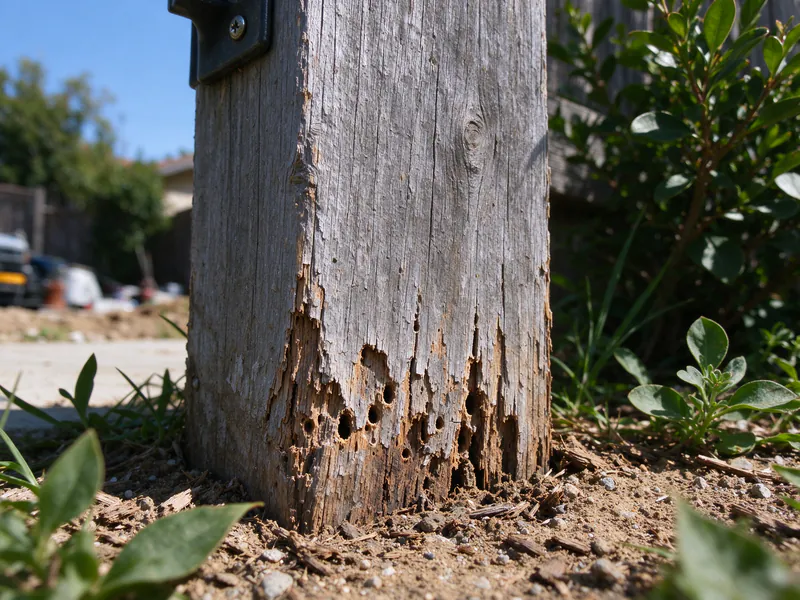
UC IPM’s pest notes describe two kinds of termites that matter here. Subterranean termites, covered in Publication 7415, live in the soil and reach wood through contact or mud tubes; the note lists untreated fence posts near a structure among things that can contribute to an infestation, and says wood in soil contact should be chemically treated or naturally resistant. Drywood termites, Publication 7440, are common in Southern California and nest inside wood without touching the soil, so a rail or picket well above the ground can be riddled while the post looks fine.
For a repair, that means termite damage is a reason to look further. Mud tubes on a post, wood that sounds hollow, or small, hard pellets collecting below a rail are signs to check the neighboring posts and rails before deciding on a spot fix. Damaged wood is cut out and replaced with treated material or steel. Treating an active colony, particularly one close to the house, is work for a licensed pest control company, separate from the fence repair. The termites and fence posts guide explains how to tell the two kinds apart.
Find out whether it is one post or the whole run
Send photos of the leaning or broken section and the posts beside it. The scope follows from what the neighbors look like.
Broken boards, panels and rails by material
Each fence type fails in its own way, and the repair follows the material.
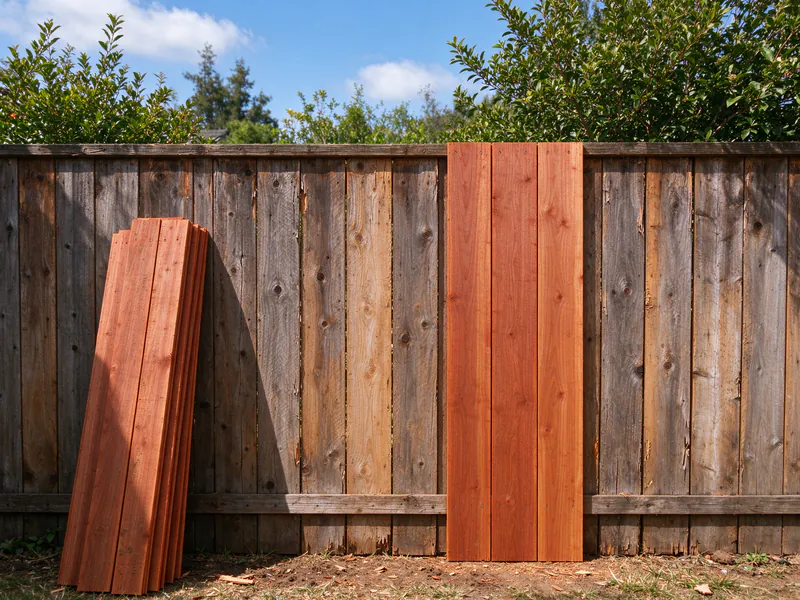
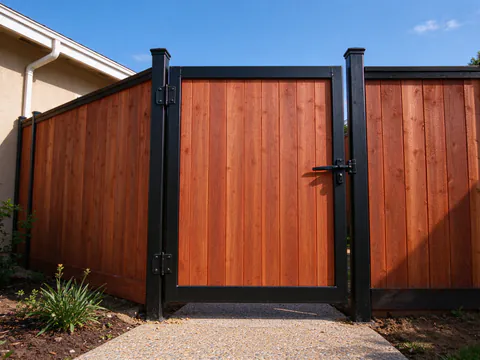
- Wood. Boards split, warp and loosen as they dry; rails crack at the post or sag between posts. Boards and rails are replaced in the same species and size, and new wood stays brighter than old for a season or two unless it is stained.
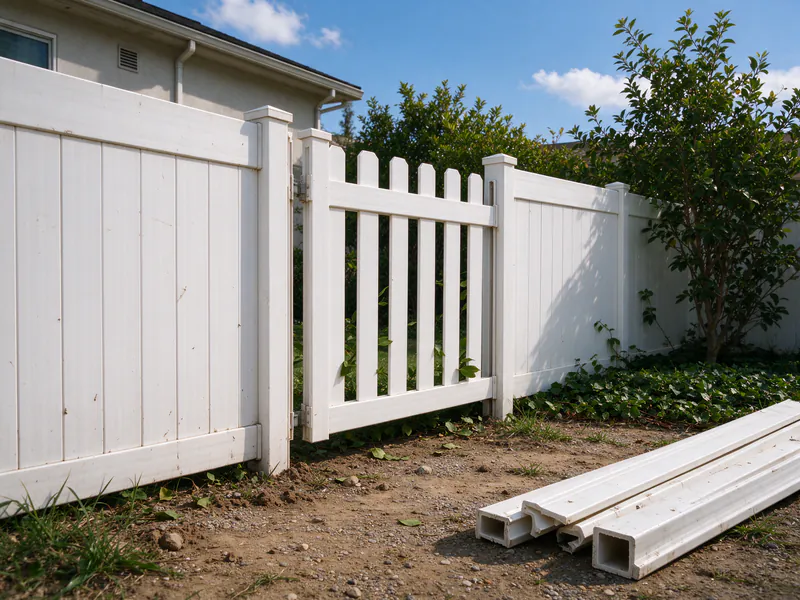
- Vinyl. Panels on a vinyl fence crack on impact, and rails can pop out of their post routes in a hard gust. Parts interlock, so a damaged panel or rail can often be swapped, provided the system is still made or a close match exists. A vinyl post that leaned usually needs a new footing and, on a windy line, a metal insert.
- Chain link. Fabric on a chain link fence goes slack when a post leans or a top rail bends. The repair is in the framework: straighten or replace the rail and posts, then re-stretch the fabric with a tension bar. Tying slack fabric to a bent rail does not hold.
- Iron and tubular steel. Rust starts where the post meets the concrete or where water sits inside a rail. Rusted pickets and rails can often be cut out and new sections welded in, then primed and painted.
Gates that drag or will not latch are their own repair, covered on the gate installation page.
Wind damage
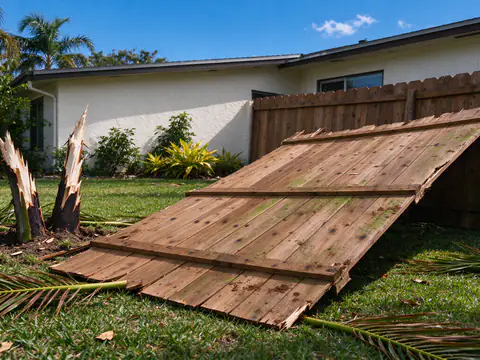
Wind finds the weakest post. NWS San Diego issued 44 High Wind Warnings for the Inland Empire valley zone that includes Ontario between January 2016 and October 2026, almost all from October through March, with warning gusts typically forecast at 55 to 75 mph. A solid privacy fence takes the full load of a gust, and the fence usually breaks where a post had already lost some of its grip or strength. After a wind event, the broken section is repaired and the posts beside it are checked, since a lean of an inch or two is a warning for the next storm. The Santa Ana wind guide covers how a fence line fails, and the wind damage insurance guide covers documentation for a claim; whether a policy pays is the insurer’s decision.
Repair or replace: keeping the two apart
A repair replaces the parts that failed and leaves the rest. It makes sense when the damage has a clear, local cause, such as a car, a fallen branch, one wet sprinkler zone or a single undersized footing, and the rest of the fence has years left in it. It stops making sense when the failure is the fence’s age showing: posts soft at the ground line along the run, termite damage that keeps turning up, vinyl brittle with sun or chain link rusted through. Once a repair reaches a large share of the posts, a replacement quote belongs beside it. The repair or replace assessment walks through the signs, and the how long fences last guide sets realistic lifespans by material.
On a shared fence, California Civil Code 841 presumes adjoining owners share the reasonable cost of maintaining a dividing fence, and an owner who wants the neighbor to share the cost gives 30 days’ written notice first; the good neighbor fence law guide explains what goes in it. Ontario’s Building Permit FAQ requires a permit for wood, chain link and iron fences over 3 feet but does not set a threshold for repairs, so where a repair rebuilds a long run, the permit question is checked with the Building Department first. A rebuilt section must still meet the Development Code height limits.
What sets the cost of a fence repair
Repairs are priced by what failed, not by the foot, and no single figure covers them. The number of posts comes first, and whether each one is a treated wood or steel replacement. Breaking out old concrete footings adds time, and so does tight access between a fence and a house wall. Matching old material, especially discontinued vinyl or an unusual board size, can cost more than a standard part. Grouping several small repairs into one visit usually costs less than the same repairs spread across separate trips. The Ontario fence cost guide shows how repair sits beside new fence pricing.