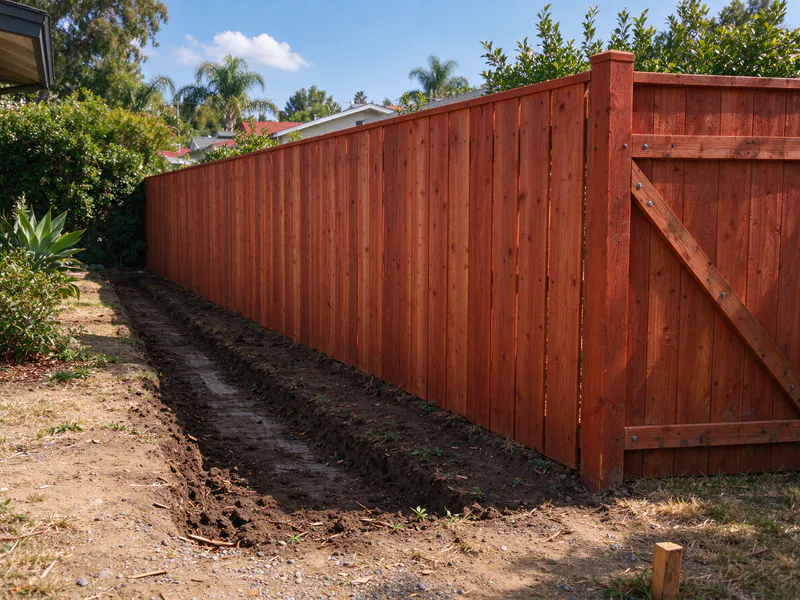
Fence replacement in Ontario, CA means taking out an old fence, its posts and its footings, hauling it all away and building a new fence on the line, usually with a building permit, since the City of Ontario requires one for wood, chain link and iron fences over 3 feet. Grove Ontario Fence Builders replaces worn-out wood, vinyl, chain link and iron fences across Ontario and the west Inland Empire, with the work carried out by licensed and insured fence contractors. This page covers when replacement beats repair, how the tear-out is handled, what to settle about the property line and a shared fence, and what the job costs per foot.
Replacement is a different job from a first fence. The line is already set, the neighbors already have an opinion about it, and the old posts and concrete sit exactly where some of the new ones want to go.
What happens on the first visit
The visit confirms that replacement is the right scope. A fence with one broken section and sound posts elsewhere is a fence repair; a fence leaning, rotting or rusting along most of its length is not. The old fence is walked end to end: post condition at the ground line, how the posts were set and in what size of footing, the material and its condition, gates, and anything attached to it, such as a neighbor’s lattice, lights or irrigation.
The line comes next. Its length, corners, gate openings and any change in grade go on the sketch; a new fence on a slope is measured for height from its low side under Development Code 6.02.020.C, so an old fence that stood taller on the high side may have to come down in height. Then the questions that decide the price: who owns the fence with you, whether anyone doubts the line, whether an HOA reviews fence changes, and what a new fence must step around. The permit and a DigAlert ticket follow, the ticket placed two working days or more ahead of digging as Government Code 4216.2 requires.
When to replace instead of repair
Repair fixes parts. Replacement makes sense when the problem is the whole fence. The signs are system-wide: wood posts soft at the ground line along the run, termite damage that turns up in rail after rail, boards brittle and split from years of sun, vinyl gone chalky and cracking, chain link rusted through at the posts, or a fence that leans in several places after every windy season. Ontario’s climate is hard on all of it: NOAA’s 1991-2020 normals put 19 days a year at or above 100°F at the airport, and that sun ages wood, vinyl and paint alike.
Termites deserve a word. UC IPM’s pest notes describe subterranean termites reaching untreated fence posts through the soil (Publication 7415) and drywood termites, common in Southern California, nesting in wood above the ground (Publication 7440). When an old wood fence comes out, its rails and posts show how widespread the damage was, and termite-riddled wood near the house is worth a pest inspection. The termites and fence posts guide covers the difference, the how long fences last guide sets realistic lifespans, and the repair or replace assessment walks through the decision.
Tear-out, old footings and haul-away
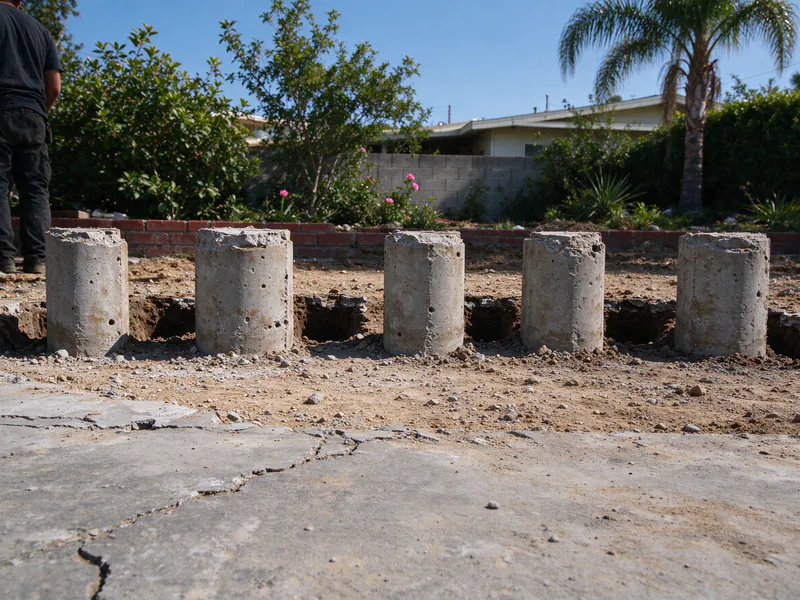
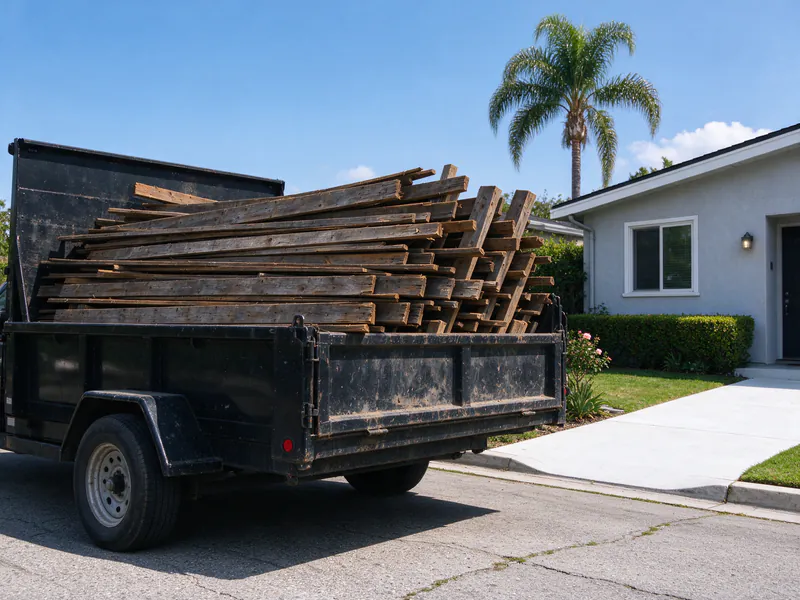
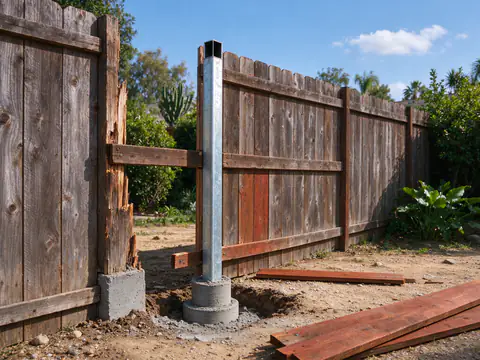
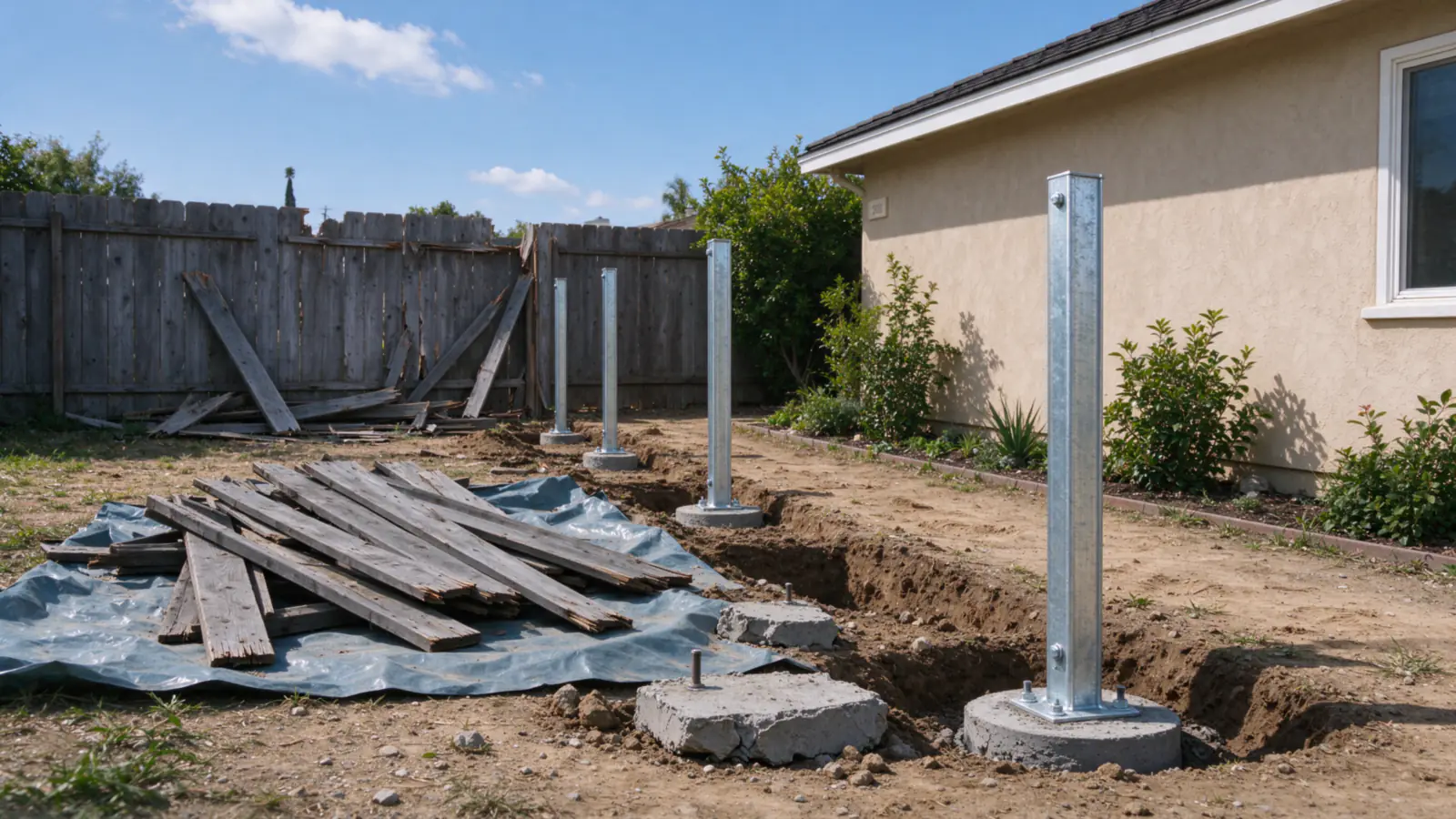
Tear-out removes the boards or panels, rails, posts and gates, and stacks them for haul-away. The posts are the slow part. Where old posts were set in concrete, each footing has to be broken out, pulled whole or left in place. A footing that sits where a new post will go has to come out completely, because a new post cannot be set properly in broken concrete. Where the new layout puts posts elsewhere, an old footing can sometimes be cut off below grade and left, which saves time and weight. In loose sand, the hole left by a pulled footing is refilled and compacted before a new post goes nearby.
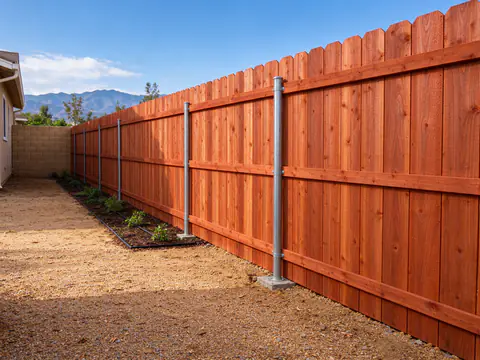
Old footings also explain why reusing old posts rarely pays. A wood post that looks sound above ground may be soft just below it, and old steel posts may be in the wrong place for the new panel width. The new fence is laid out for its own post spacing.
Survey monuments and property pins near the line are left undisturbed. Sprinkler lines, plants and anything else along the fence are part of the scope too, and the quote should say who reroutes irrigation if a post lands on a pipe.
Quote the removal and the new fence together
Send the length of the old fence, what it is made of and what you want in its place.
The property line and the shared fence
An old fence shows where a fence stood, not where the property line runs. Fences are not always built exactly on the line, and a replacement in the same place carries any error over. If both owners accept the line, that is usually how it stays. If the line is doubtful, the fence is visibly crooked or the corner pins are missing, a licensed land surveyor can mark the boundary before the old fence comes out; the property line and survey guide covers what a survey settles. Chino Hills formalizes this for permitted walls and fences: its Common Property Line Wall/Fence Agreement has all adjoining owners sign that the footing location matches the commonly recognized boundary, or else requires a stamped survey at footing inspection.
A side or rear fence between two lots is a dividing fence. California Civil Code 841, in force since January 1, 2014, presumes that adjoining owners benefit equally from a dividing fence and share the reasonable cost of necessary replacement unless they agree otherwise in writing. An owner who wants the neighbor to share the cost gives 30 days’ written notice first, describing the problem, the proposed solution, the estimated cost, the proposed split and the timeline; the replacement quote can serve as the estimate. The presumption can be rebutted, for example where the cost is unreasonable or driven by one owner’s taste. What that notice should contain is set out in the good neighbor fence law guide. This is general information, not legal advice.
Permits, rules and changing materials
Because Ontario’s Building Permit FAQ lists wood, chain link and wrought iron fences over 3 feet, replacing a backyard privacy fence is almost always a permitted job. The new fence also has to meet today’s height limits, 3 feet in a front yard and 6 feet along side and rear lines, even where the old one exceeded them. The Ontario fence permit guide covers the details.
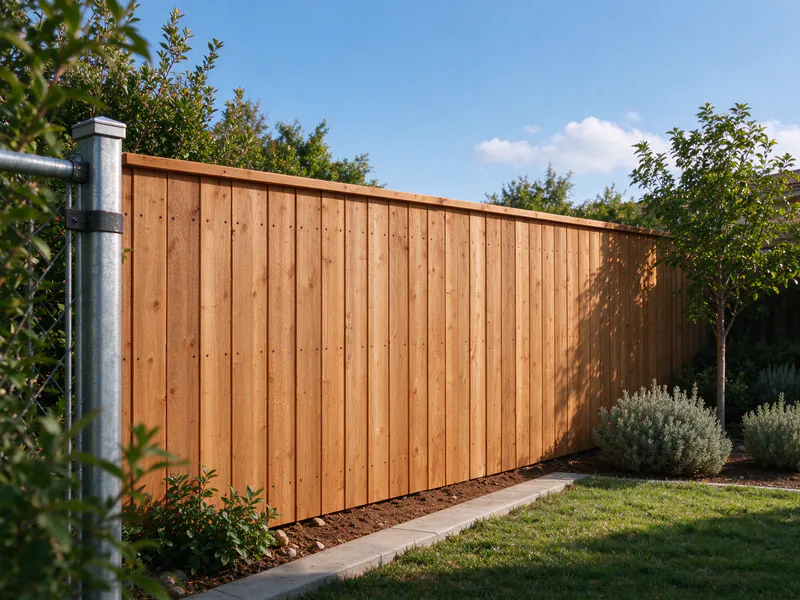
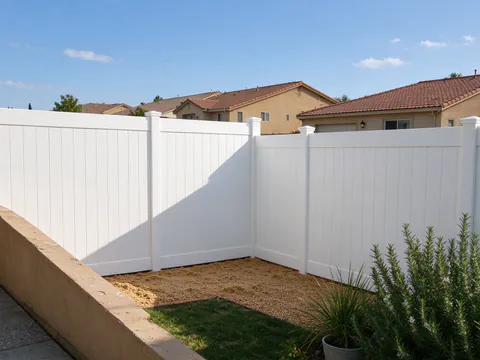
Replacement is also the natural time to change material. A wood fence can give way to vinyl, or an old chain link line to wood or steel. HOA rules can narrow the choice: some Ontario Ranch specific plans, Edenglen among them, do not allow wood on thematic perimeter fencing, and the Ontario Ranch page covers those tracts. The vinyl vs wood fence guide compares the two most common choices, and the block wall vs fence guide covers the masonry alternative.
What a fence replacement costs
A replacement is priced as two parts: removing the old fence and building the new one. Removal and haul-away runs about $3 to $8 a linear foot as a typical Southern California range, landing high where posts sit in big concrete footings or debris has a long carry to the street. The new fence is priced like any installation; the table below this article lists the typical ranges, from $18 to $38 a foot for 4 to 6 foot chain link up to $35 to $100 for wrought iron, tubular steel or aluminum.
As an illustration, replacing 120 feet of old wood fence with a 6-foot vinyl privacy fence at $35 to $75 and up per foot comes to about $4,200 to $9,000 or more for the fence, plus roughly $360 to $960 to remove and haul away the old one. Gates and the permit come on top, and the result is for budgeting, not a quote. Ontario charges permit fees on the valuation the city assigns. Its published fee table works out, for example, to $125.25 on a $6,000 valuation, or roughly $226 once plan check (80 percent of the permit fee) and a small state fee are added. Local labor costs a little more too. Bureau of Labor Statistics data puts the mean fence erector wage in the Riverside-San Bernardino-Ontario metro at $26.95 an hour, roughly 11 percent over the $24.29 national mean. That wage is not what a job is billed at: the price also has to carry materials, insurance, licensing, trucks, dump fees and overhead. The fence cost estimator and the Ontario fence cost guide go further.