
A 6-foot backyard fence that needs a building permit in Ontario needs none in Rancho Cucamonga, and that is only the first of the differences. Grove Ontario Fence Builders plans wood, vinyl and wrought iron fences, gates and block wall toppers for homes across Rancho Cucamonga, from tract streets around Victoria Gardens and Terra Vista to trail-frontage lots in Alta Loma and Etiwanda. Licensed and insured fence contractors carry out the installation. The city’s own handout on residential fences and walls, which cites Development Code Chapter 17.48, sets the rules below, and they change what a good plan looks like before anyone talks about materials.
Where Rancho Cucamonga’s rules part from Ontario’s
Ontario’s Building Permit FAQ requires a permit for wood, chain link and wrought iron fences over 3 feet, so nearly every backyard fence there is a permitted job. Rancho Cucamonga draws the line at 6 feet. Under Municipal Code 15.1.010, as the city’s handout summarizes it, a building permit is needed for a fence above 6 feet, for concrete or masonry walls and pilasters above 3 feet from the lowest adjacent grade, and for retaining walls 3 feet or more from footing to top. The rest of the differences show up in front and street-side yards.
| Rule | Rancho Cucamonga | Ontario |
|---|---|---|
| Building permit for a fence | Only above 6 ft | Wood, chain link and iron over 3 ft |
| Masonry walls and pilasters | Permit above 3 ft | Permit over 3 ft |
| Front yard | Solid up to 3 ft; open picket or iron up to 6 ft | 3 ft for any fence |
| Street-side yard | Up to 6 ft, set back at least 5 ft from the property line | Up to 6 ft on the line, with landscaping to the curb |
| Over 6 ft | Up to 2 ft more by Minor Exception, with neighbor notice | Not on property lines, outside retaining and sound wall cases |
| Corner visibility | Nothing over 3 ft in 20-ft triangles at intersections, 10-ft at driveways and alleys | Nothing over 3 ft in the corner clearance area |
No permit does not mean no rules. Height is measured from the finished grade at the base of the fence, and where neighboring lots sit at different grades, from the midpoint of the retaining wall on the low side. Planning (909-774-4330) answers questions for a specific lot, and Building & Safety (909-477-2710) handles the walls and taller fences that need permits. The fence permit and height guide sets these rules beside Ontario’s and Chino Hills’.
Materials the city accepts for privacy
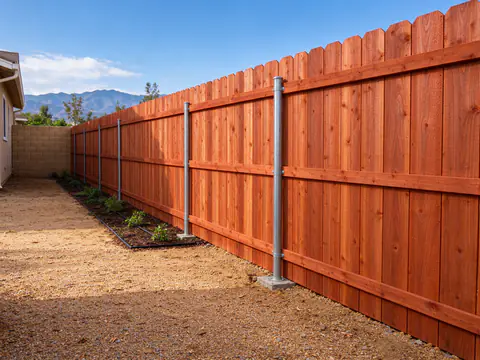
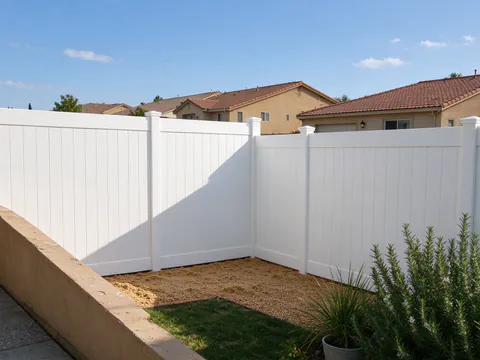
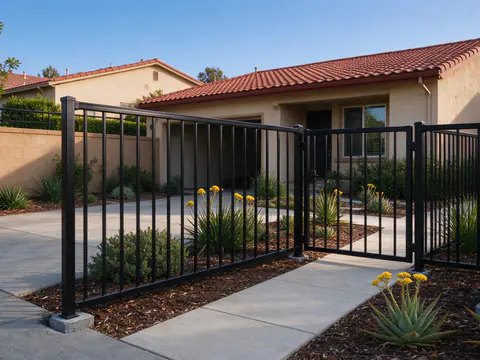
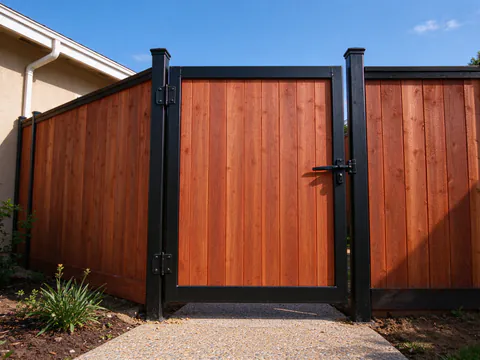
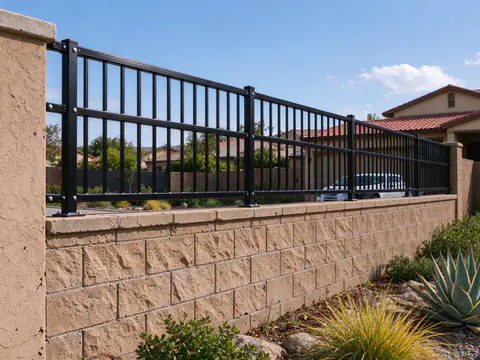
Rancho Cucamonga is specific about what may screen a yard. Privacy fences and gates in residential districts must be solid wood with steel frames, solid vinyl, tubular steel or wrought iron, and iron or steel used for screening has to be backed with solid or perforated metal sheeting painted to match. Chain link is not allowed for screening in any zone, and that includes chain link with slats, plastic sheeting or fabric. Residential perimeter walls are decorative block: split-face, fluted, or block finished in stucco or stackstone.
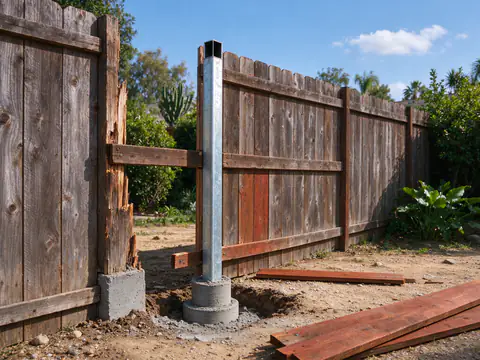
Those rules narrow the menu in practical ways. A wood privacy fence is built on a steel frame, which usually means galvanized steel posts with the boards facing out; confirm with Planning how a specific design meets the steel-frame wording before ordering. A vinyl fence qualifies as long as it is solid. A wrought iron or tubular steel fence used for privacy needs its backing panel planned and painted with the fence. Adding height to an existing wall goes through block wall extensions, where the wall’s footing and the 3-foot permit trigger both come into play.
From the foothills to Foothill Boulevard
The north side of the city is a different fence job from the south. CAL FIRE’s fire hazard severity zone map puts about 30 percent of the land inside city limits in the Very High zone, concentrated on the north side below the San Gabriel Mountains. Government Code 51182 already requires homes in those zones to keep 100 feet of defensible space, including an ember-resistant zone within 5 feet of the house under rules from the State Board of Forestry and Fire Protection. The Board’s draft rules for that 5-foot zone would bar new combustible fences there and call for a noncombustible section, such as a metal gate, where a fence attaches to the house. Those rules are not final, so the current requirement is confirmed per address, but building the last section in metal now avoids replacing it later if they take effect. Check a parcel on CAL FIRE’s official zone viewer, and see the wildfire zone fence guide.
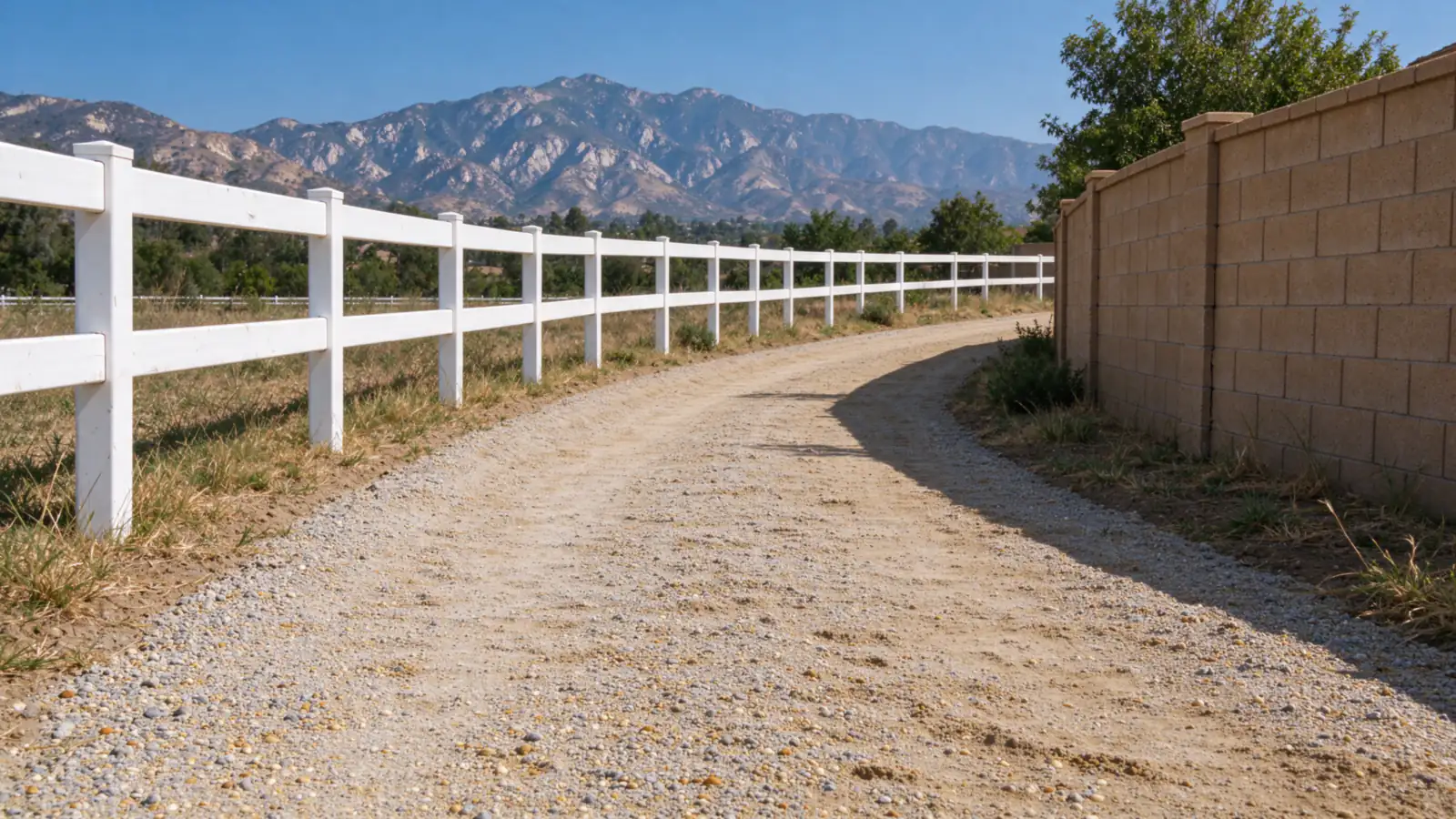
Alta Loma and Etiwanda add the trails. The city’s trail standard plans show a 20-foot community trail dedication holding a 12-foot decomposed-granite trail, with a decorative block wall on the lot side and a PVC trail fence, Standard Drawing 1010, on the street side. Fence lines stop 10 feet back from easement corners, 5 feet back from the edge of a driveway approach, 2 feet either side of a fire hydrant and 1 foot either side of a pole. Replacing a trail fence means matching that standard, and because the drawings were last revised in the 1990s, the current detail is confirmed with Rancho Cucamonga Engineering before anything is ordered.
The ground and the wind finish the picture. USDA soil survey data maps much of Rancho Cucamonga as Hanford coarse sandy loam on 2 to 9 percent slopes, about 70 percent sand with 12.5 percent clay. That holds a post better than the 80-percent-sand Tujunga soil under central Ontario, but the slope of the alluvial fan means stepped or racked panels and grade changes between neighbors, especially on the north side. The soil records do not describe rock, so digging conditions are confirmed on the site walk. For wind, the National Weather Service places Rancho Cucamonga in its Inland Empire valley zone, which logged 44 High Wind Warnings from January 2016 through October 2026, all of them between September and April and most in the colder months, and its warnings often place the strongest gusts below the Cajon Pass, naming I-15 among the affected corridors. The east side of the city, along I-15 toward Fontana, is the part closest to that pass. The Santa Ana wind guide covers what that means for post spacing and gate hardware.
How a Rancho Cucamonga job usually runs
It starts with the address, which settles the city, the fire zone and whether the lot fronts a trail. The site walk measures the line, marks gates and slopes, and finds the street-side property line, since a new street-side fence has to sit at least 5 feet behind it and the line does not always sit at the sidewalk. Where the line is in doubt, the property line and survey guide explains when a surveyor is needed. If the tract has an HOA, its approval comes next; the HOA fence approval guide covers what a submittal usually needs.
A fence of 6 feet or less skips the building permit, but it does not skip DigAlert. Government Code 4216.2 requires a ticket at least two working days before post holes are dug, and the exemption for work that needs no permit applies to homeowners digging their own holes, not to the contractor doing the work. Posts go in and cure before rails and panels, gates are hung last so they close square, and the job ends with a walk of the finished line. A fence that only needs posts or panels after a wind night is a fence repair job instead.
Why the plan follows the city line
Rancho Cucamonga borders Ontario to the south, and the rules flip at that boundary: the permit threshold, the front-yard height and the street-side setback all change. Every plan starts by confirming which city the parcel sits in. Homes farther south and west fall under different rules again, covered on the Ontario Ranch page and the Chino Hills page.