
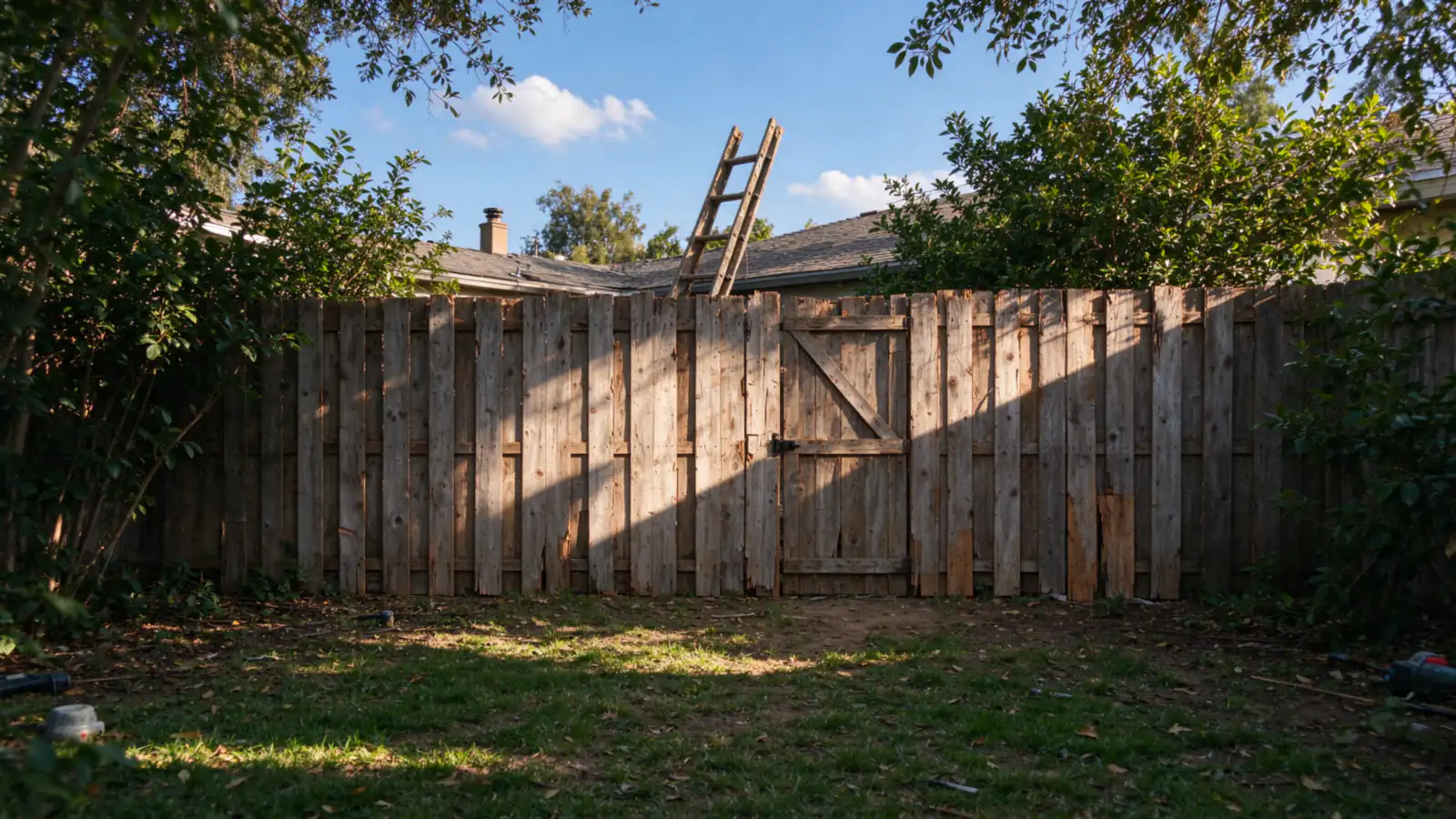
Asking a neighbor to split the cost of a fence goes best when you arrive with three things settled: where the line is, what the job will cost, and what you are actually asking them to pay for. California law gives you a starting point, since Civil Code 841 presumes adjoining owners share the reasonable cost of a dividing fence, but the law is the fallback. The conversation is what gets the fence built without a feud.
Grove Ontario Fence Builders replaces and installs fences across Ontario and the west Inland Empire, with the work carried out by licensed and insured fence contractors, and many of those fences sit on a line two households share. This post covers the practical side of the conversation. The good neighbor fence law guide covers the statute itself.
Before you knock: know the line
Do not assume the old fence marks the property line. Fences get built a few inches inside one lot or the other, rebuilt on new posts, or bent around trees, and decades later nobody remembers. If the new fence is meant to sit on the shared line, find out where that line is first. Your deed, the recorded tract map and any corner monuments are a start; a licensed surveyor settles it. The property line and survey guide explains when a survey is worth the cost.
Knowing the line changes the conversation. A fence on the line is a shared fence. A fence built entirely on your side, a few inches in, is yours to build and pay for alone, and the neighbor’s agreement on cost is no longer needed.
Bring a real number
A neighbor asked to “split a new fence” has no idea what they are agreeing to. Get a written quote first, ideally two, with the footage, height, material, post type, gates, tear-out of the old fence and the permit spelled out. The fence cost guide shows typical installed ranges, such as $30 to $70 per linear foot for a 6-foot redwood or cedar privacy fence and $3 to $8 per foot for removing the old one, and the cost estimator gives a quick figure before a quote exists.
The quote also does double duty. If you end up sending formal notice under Civil Code 841, the law asks for the estimated cost, and a contractor’s written quote is the natural source.
Have the conversation
Pick a calm moment, in person if you can, and start with the problem rather than the money: the leaning section, the broken posts, the dog that keeps getting through. Most neighbors have noticed it too. Then explain what you are planning and why.
A few things make the money talk easier:
- Offer a basic option. Price a plain replacement, and if you want an upgrade such as a taller board-on-board fence or premium vinyl, offer to cover the difference yourself.
- Show the style. Bring a photo or product sheet. The vinyl vs wood fence guide helps if you are both still deciding on a material.
- Talk about the side they see. Board-on-board and most vinyl privacy styles look the same from both sides, which takes the “good side” question off the table.
- Ask about their side of the line. Planters, sprinklers, a shed or a pool equipment pad near the fence will affect access and the work.
- Leave time. A neighbor may need to talk to a spouse, check a budget or ask an owner who lives elsewhere.
If the house next door is a rental, the cost conversation and any formal notice go to the owner, not the people living there, though it is courteous to let the household know the schedule.
Put the agreement in writing
Once you agree, write it down, even in a short signed letter. It should cover:
- the material, height and location of the fence
- the total cost and each household’s share
- when and how each share is paid, and who pays the contractor
- who handles the permit, since Ontario requires a building permit for most fences over 3 feet
- access to the neighbor’s yard during installation, and who restores planting or sprinklers on each side
- removal of the old fence and who owns any salvaged material
Civil Code 841 lets neighbors agree to something other than an even split, so a written agreement is also where an uneven share is recorded. The Ontario fence permit guide explains the permit, and in a tract with an association, the HOA fence approval guide covers the review that sits on top of it.
If the answer is no
Not every neighbor agrees. Three paths remain. You can build the fence entirely on your side of the line and pay for it yourself, which needs a confident line location and often a survey. You can send formal 30-day written notice under Civil Code 841, which sets out the problem, your proposed solution, the estimated cost, the proposed split and the timeline; the good neighbor fence law guide lists what the notice must include. Or you can ask a community mediation service to help before anything escalates. Small claims court is the last resort, and this post is general information, not legal advice.
One local wrinkle: block walls. In Chino Hills, a permitted wall on a shared line needs every adjoining owner’s signature on the city’s property line agreement, or a stamped survey at the footing inspection, so a neighbor who will not sign adds a surveyor to the schedule. The Chino Hills page explains the rule. For a wood or vinyl fence replacement, the fence replacement page shows how the work runs once both households are ready.